Why does my washing machine smell is a common issue caused by residue buildup, trapped moisture, and inefficient cleaning cycles that allow bacteria and mold to develop inside the machine.
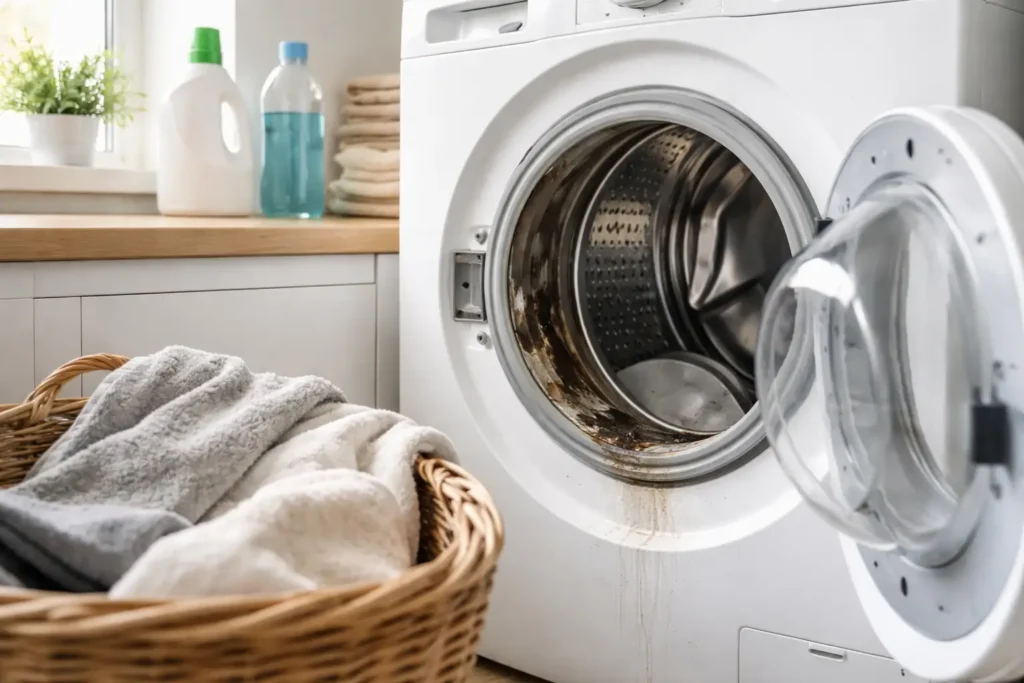
Even machines that appear clean on the outside can develop odor over time. The smell usually comes from internal areas that are not regularly exposed to airflow or proper rinsing. Instead of being a one-time issue, it is often the result of repeated washing patterns that gradually create conditions for buildup.
Understanding what causes the smell is the first step toward eliminating it effectively.
Root Causes of Washing Machine Odor
Odor inside a washing machine typically develops when organic residue combines with moisture and limited airflow.
The most common sources include:
Detergent Residue
Excess detergent or low-quality formulas can leave behind a film inside the drum and internal components.
Fabric Softener Buildup
Softeners create a coating that traps moisture and bacteria, especially in hidden areas.
Low-Temperature Wash Cycles
Frequent cold washes reduce the machine’s ability to dissolve oils and kill bacteria. This limitation becomes even more noticeable in absorbent fabrics, which explains why towels often retain odor after washing when bacteria are not fully eliminated.
Trapped Moisture
Seals, gaskets, and internal compartments retain water after each cycle, creating an environment for mold growth. These same conditions are often responsible for musty odors inside the home, where moisture remains trapped due to limited airflow.
These elements often work together rather than independently, which is why the smell tends to persist or worsen over time.
Why Does My Washing Machine Smell After Washing Clothes
If the smell is strongest immediately after a wash cycle, it usually indicates that contaminants are being redistributed rather than removed. This explains why clothes sometimes smell worse after washing than before. A similar pattern is analyzed in detail when clothes develop odor even after washing, where residue and bacterial transfer play a central role.
This happens when:
- The drum is not fully cleaned between cycles
- Residue is reactivated by water and heat
- Bacteria are present in internal components
Instead of producing clean laundry, the machine transfers odor back onto fabrics.
This explains why clothes sometimes smell worse after washing than before.
Hidden Areas Where Odor Develops
The source of the smell is rarely the visible drum. It typically forms in areas that are difficult to access.
Rubber Door Seal (Gasket)
Front-loading machines often trap water and debris inside the folds of the seal.
Detergent Drawer
Residual detergent and softener accumulate over time and create bacterial growth.
Drain System
Standing water in hoses or filters can develop odor if not flushed regularly. A similar buildup process can affect household drainage systems, where sink odors develop over time due to organic accumulation and restricted water flow.
Internal Drum Surface
Even stainless steel drums can develop buildup when cycles are not sufficiently hot or strong.
These zones act as reservoirs where odor persists even if the visible parts of the machine appear clean.
Practical Adjustments That Eliminate Odor
Removing the smell requires both cleaning and preventing future buildup.
Run a High-Temperature Cleaning Cycle
Use hot water with either a machine cleaner or white vinegar to break down residue.
Clean the Gasket Thoroughly
Wipe inside the rubber seal and remove trapped debris and moisture.
Flush the Detergent Drawer
Remove and rinse it under running water to eliminate accumulated product.
Leave the Door Open After Use
Allowing airflow reduces moisture retention and prevents mold growth.
Use the Correct Amount of Detergent
Excess detergent increases buildup rather than improving cleaning.
These actions address both the immediate cause and the underlying conditions.
How Washing Habits Contribute to the Problem
The way a machine is used plays a major role in odor development.
Common habits that increase risk include:
- Using too much detergent
- Running only short or cold cycles
- Overloading the machine
- Closing the door immediately after use
Each of these reduces the machine’s ability to self-clean during normal operation.
Over time, these habits create conditions where buildup becomes inevitable, reinforcing a cycle of recurring odor.
Preventing Odor From Returning
Once the smell is removed, maintaining the machine becomes a matter of consistency.
Key prevention strategies include:
Schedule Regular Cleaning Cycles
Run a cleaning cycle every few weeks to prevent accumulation.
Alternate Between Warm and Hot Washes
This helps break down residue that cold water alone cannot remove.
Reduce Product Usage
Using less detergent often improves overall cleaning performance.
Maintain Airflow
Keep the door and detergent drawer slightly open when not in use.
Preventing odor is less about deep cleaning and more about maintaining balance within the system.
When Odor Indicates a Deeper Issue
In some cases, persistent odor may indicate a more significant problem.
Possible signs include:
- Strong smell even after cleaning cycles
- Water not draining properly
- Residue appearing repeatedly
These may suggest issues such as:
- Blocked drain hoses
- Internal buildup beyond surface cleaning
- Mechanical inefficiencies
If these conditions persist, a deeper inspection or maintenance may be required.
Conclusion
A washing machine develops odor not because it is unused, but because it is used under conditions that allow residue and moisture to accumulate.
When detergent buildup, trapped water, and low-temperature cycles combine, they create an environment where bacteria can thrive.
The solution is not a single deep clean, but a shift in how the machine is used and maintained.
By adjusting washing habits, reducing residue, and improving airflow, it is possible to eliminate odor and prevent it from returning.