Why does my bathroom smell like sewage is a common issue caused by drainage imbalances, trapped gases, or buildup within plumbing systems that allow unpleasant odors to enter the space.
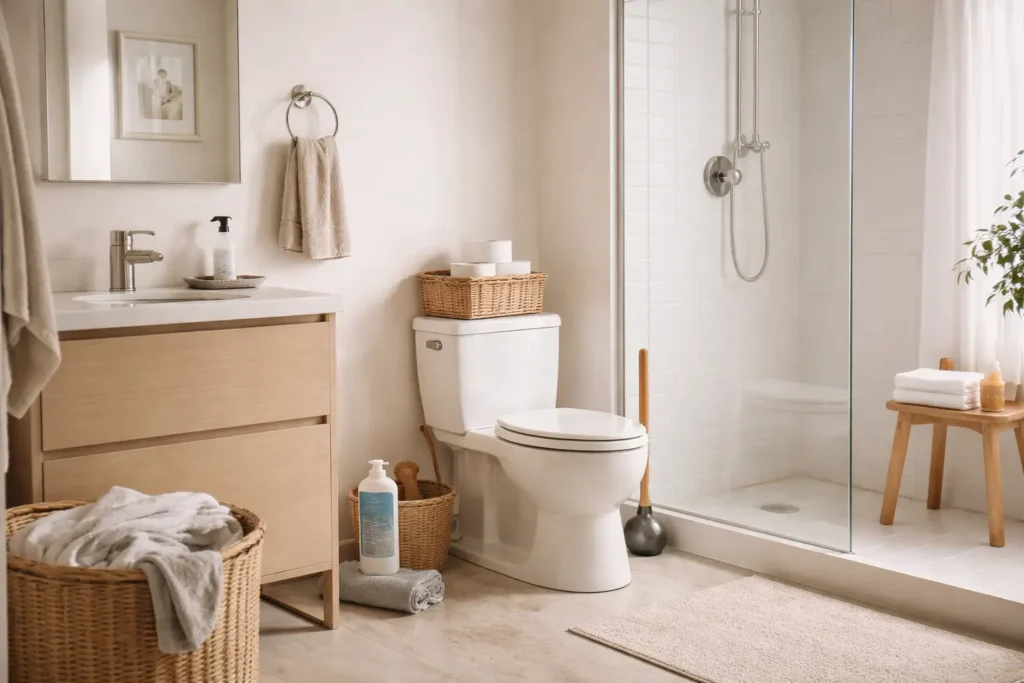
This type of smell often appears suddenly, but it is rarely random. In most cases, it reflects a disruption in how the drainage system is functioning. Instead of sealing odors within the pipes, small failures allow sewer gases to move back into the bathroom environment.
Understanding where the smell originates is essential before attempting to fix it.
Root Causes of Sewage Smell in Bathrooms
Sewage odor is typically the result of gases escaping from the plumbing system rather than remaining contained.
The most common sources include:
Dry P-Trap
The curved pipe under sinks, showers, and floor drains is designed to hold water. This water acts as a barrier that blocks sewer gases. When it dries out, odors can pass through freely.
Drain Buildup
Hair, soap residue, and organic matter accumulate over time, creating a source of odor inside the pipes. This type of buildup behaves similarly across different drainage points in the home. A comparable pattern can be observed in why does my sink smell, where residue accumulation inside pipes leads to recurring odor issues.
Ventilation Issues
Plumbing systems rely on vent pipes to regulate pressure. When these vents are blocked or malfunctioning, gases may be pushed back into the bathroom.
Seal Failures
Loose or damaged seals around toilets and drains can allow odors to escape.
These causes often overlap, which is why the smell can feel persistent or difficult to eliminate.
Why Does My Bathroom Smell Like Sewage After Showering
If the smell becomes stronger after using the shower, it usually indicates that water movement is activating the problem.
When water flows through the system:
- Pressure changes occur inside the pipes
- Air is displaced
- Gases are pushed upward if the system is unbalanced
This can happen when:
- The P-trap is partially dry
- Drain buildup is disturbed
- Ventilation is restricted
As a result, the smell may appear only during or after water usage, rather than being constant.
Hidden Mechanisms That Allow Odor to Escape
Even when plumbing appears to function normally, small structural gaps can allow odors to pass through.
Micro-Leaks in Seals
Tiny gaps around connections may not leak water but can still release gas.
Negative Pressure in Pipes
When air cannot flow properly through vent systems, pressure changes can pull gases upward.
Slow Drainage
If water drains too slowly, residue remains inside the pipes, increasing the likelihood of odor formation.
These mechanisms often go unnoticed because they do not create visible damage.
Practical Adjustments That Eliminate Sewage Odor
Addressing the smell requires targeting both the source and the conditions that allow it to persist.
Refill Dry P-Traps
Pour water into unused drains to restore the barrier that blocks gases.
Clean the Drains
Use a combination of hot water and mild cleaning agents to remove buildup inside pipes. Consistent drain cleaning plays a critical role in preventing odor formation. A more detailed breakdown of effective cleaning methods can be found in how to clean bathroom drains properly, which outlines simple maintenance steps that reduce buildup over time.
Check Toilet Seals
Ensure that the base of the toilet is properly sealed and stable.
Improve Ventilation
If possible, verify that vent pipes are not blocked and allow proper airflow.
Flush the System
Running water through all drains helps stabilize pressure and clear residue.
These adjustments are simple but effective when applied consistently.
Behavioral Patterns That Contribute to Recurring Odor
Certain habits increase the likelihood of sewage smells returning:
- Rarely using certain drains
- Ignoring slow drainage
- Allowing buildup to accumulate
- Delaying minor maintenance
Over time, these patterns create conditions where odor becomes recurring rather than occasional. This accumulation dynamic is also visible in other household systems, such as why does laundry pile up so fast, where small delays lead to compounding buildup and recurring disruption.
When the Smell Indicates a Deeper Problem
In some cases, sewage odor may signal a more significant issue within the plumbing system.
Possible indicators include:
- Persistent smell despite cleaning
- Multiple drains producing odor
- Gurgling sounds from pipes
- Water draining inconsistently
These symptoms may suggest:
- Blocked vent pipes
- Sewer line issues
- Structural damage in the system
If these signs are present, a more detailed inspection may be necessary.
Preventing Sewage Smell From Returning
Long-term prevention depends on maintaining balance within the drainage system.
Effective strategies include:
Use All Drains Periodically
This prevents P-traps from drying out.
Maintain Regular Cleaning
Removing buildup reduces odor formation.
Monitor Drain Performance
Slow drainage is often an early warning sign.
Address Small Issues Early
Fixing minor problems prevents larger disruptions.
When these practices are applied consistently, the system remains stable and odors are less likely to return.
Conclusion
Sewage odor in the bathroom is not a random occurrence—it is the result of structural imbalances within the drainage system.
When water seals fail, buildup accumulates, or airflow is disrupted, gases can escape into the environment.
The solution is not a single fix, but a combination of small adjustments that restore system balance.
By maintaining proper drainage function, airflow, and cleanliness, it is possible to eliminate the smell and prevent it from returning.